The First SASSAk12 Discovery & Connection Day
Community youth explore ecology, archaeology, and paleontology through play
SASSk12 hosted their first Discovery & Connection day on March 14 at the Frogtown community center in St. Paul. In a “choose your own adventure” format, Board members and volunteers created different stations for youth community members and their families to explore.
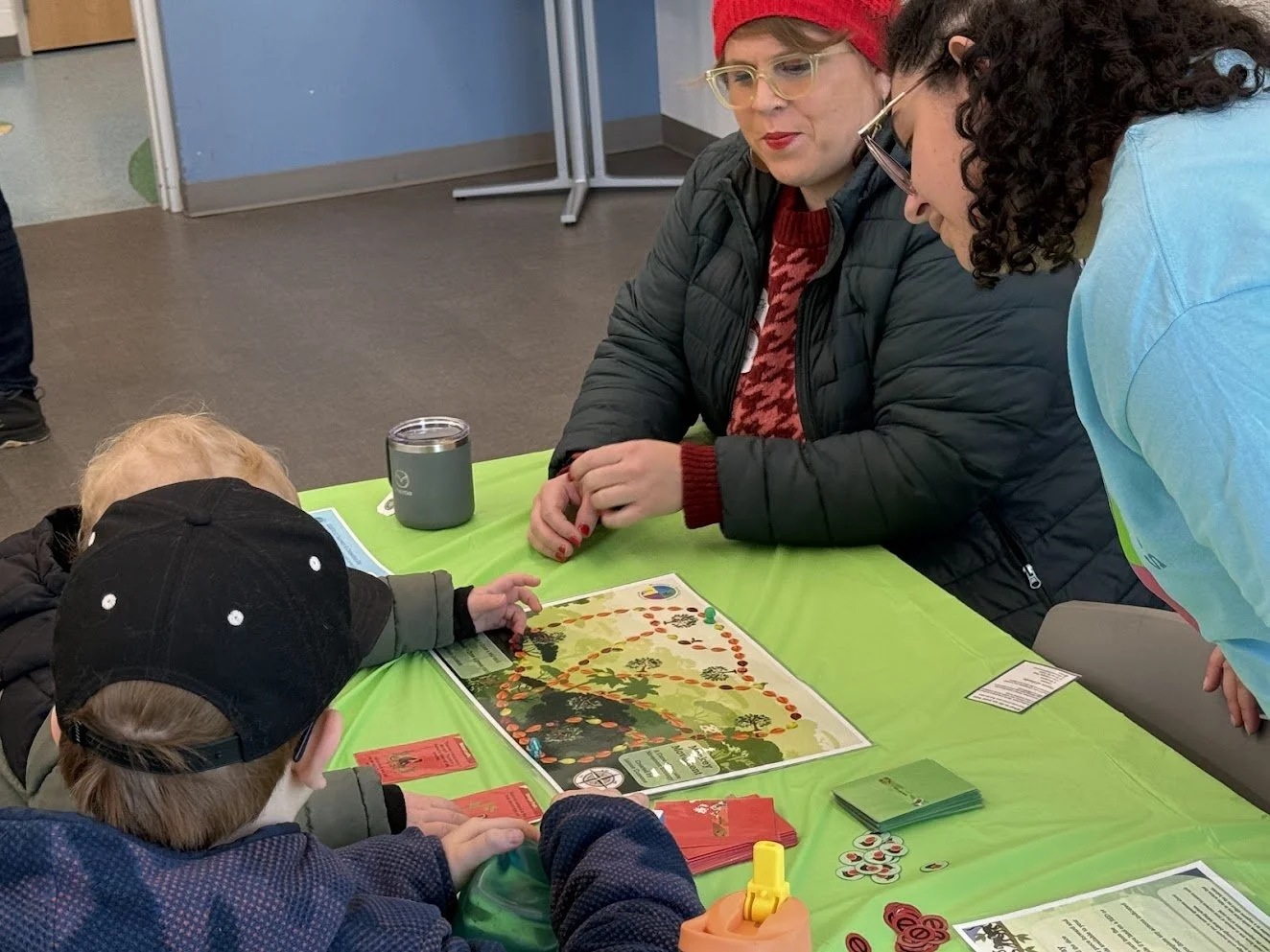
Exploring “Monkey Movement,” a hands-on game where players think like primates to balance risk, resources, and chance to survive. (Photo credit: Alexandra DeYoe)
Explorers could discover how primates survived by avoiding predators and gathering food in a colorful boardgame. The game challenged players to think like a wild monkey in their native environment and consider the trade-off necessary to survive (i.e. getting 5 figs to win). With their turns being decided by a roll of a die, players had to contend with how far chance would let them go and what obstacles would follow or helpful benefits might ensue.
In “How to Build Forest”, players follow a game-based “roadmap” shaped by events that tell the story of ecological succession. (Photo credit: Alexandra DeYoe)
Another station focused on ecological succession in a boardgame format. Depending on a dice roll, players could land on a square allowing their environment to develop soil, start growing grass and shrubs or be destroyed by a dreaded volcanic eruption or deer overgrazing their young forest. After completing the boardgame to the end of the roadmap, players would then draw how their ecological succession occurred. By drawing how each player travelled the roadmap, explorers can learn how different ecological succession can change by just one (or multiple) harmful (or helpful) event.
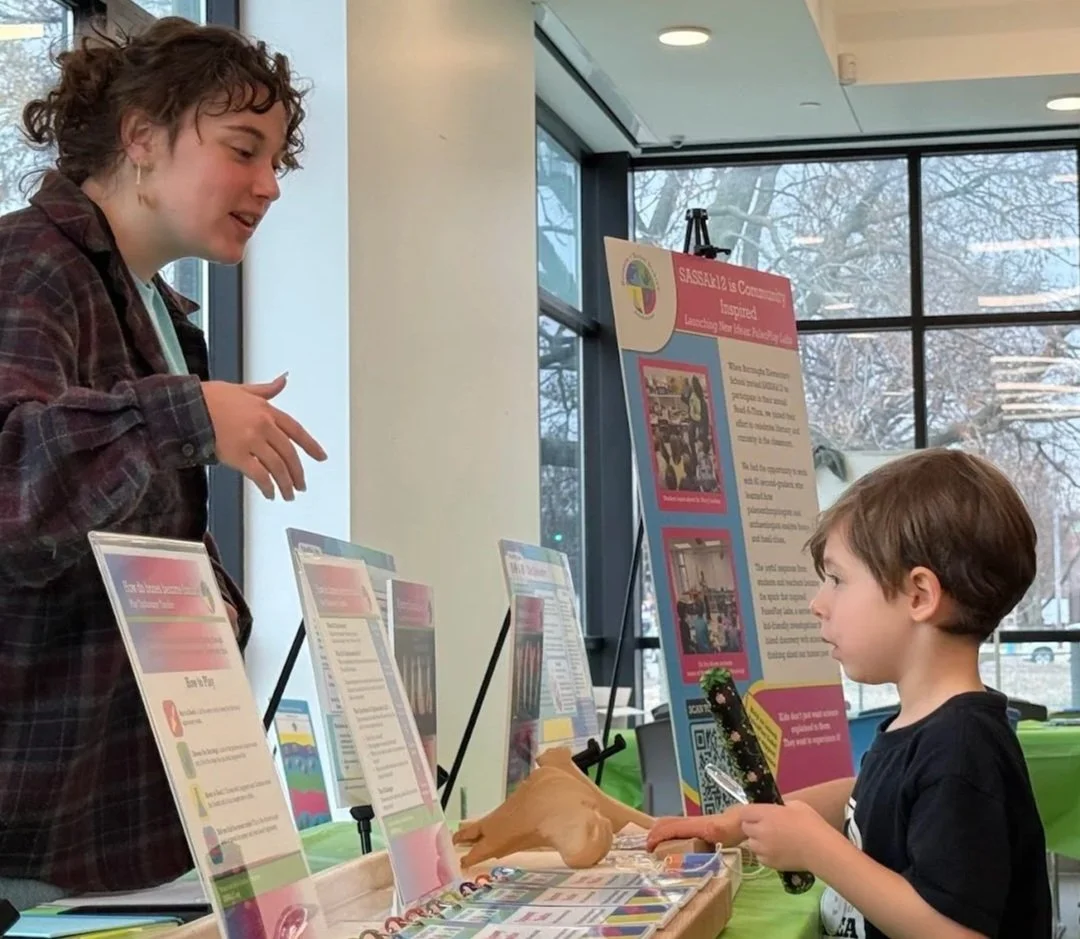
At the PaleoPlay station, young explorers—with the help from PRP participant, Laena—investigate how fossils form and examine bone markings to uncover the story of the past. (Photo credit: Alexandra DeYoe)
In the PaleoPlay lab tables, explorers could discover how fossils are created using a picture timeline. With the flippable critter cards, participants must flip through 6 images and put each deck in the correct order of decomposition to accurately show fossil creation. Additionally, participants can be bone detectives by using a magnifying glass to assess marks engraved on bones. Was it created by a stone tool? Or a predator’s teeth?
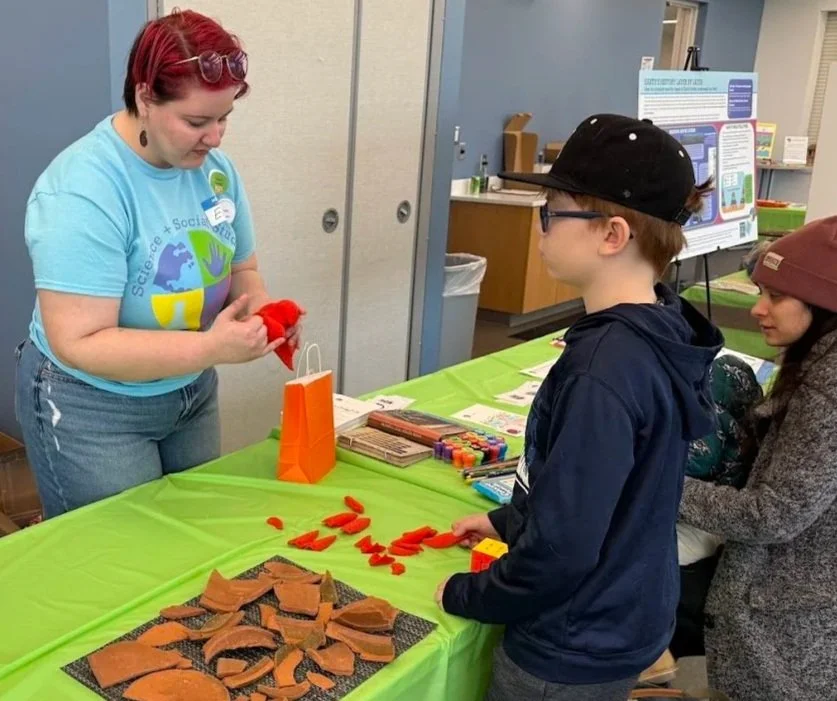
At the “From Fragments to Fact” station, participants piece together broken pottery and explore fossils across Earth’s layers to build connections between fragments, time, and the stories they reveal. (Photo credit: Alexandra DeYoe)
Explorers could test out their puzzle solving skills in the From Fragments to Fact station which included a clay pot in pieces and a 3-D print of part of an Elk’s femur to fit back together. Next door to these fragments, participants could discover Earth’s history layer by layer. Four posters set up across the room showed different fossils (Trilobites, Brachiopods, and Ammonites) in different layers. Participants had to find these posters and draw on their game sheet what they saw. By seeing how these fossils can be in different layers of the Earth, participants could better understand how fossils tell time to Archaeologists and Paleontologists. Additionally, participants could create their own geological timeline with stamps and color pencils to draw different fossils in Earth’s layers.
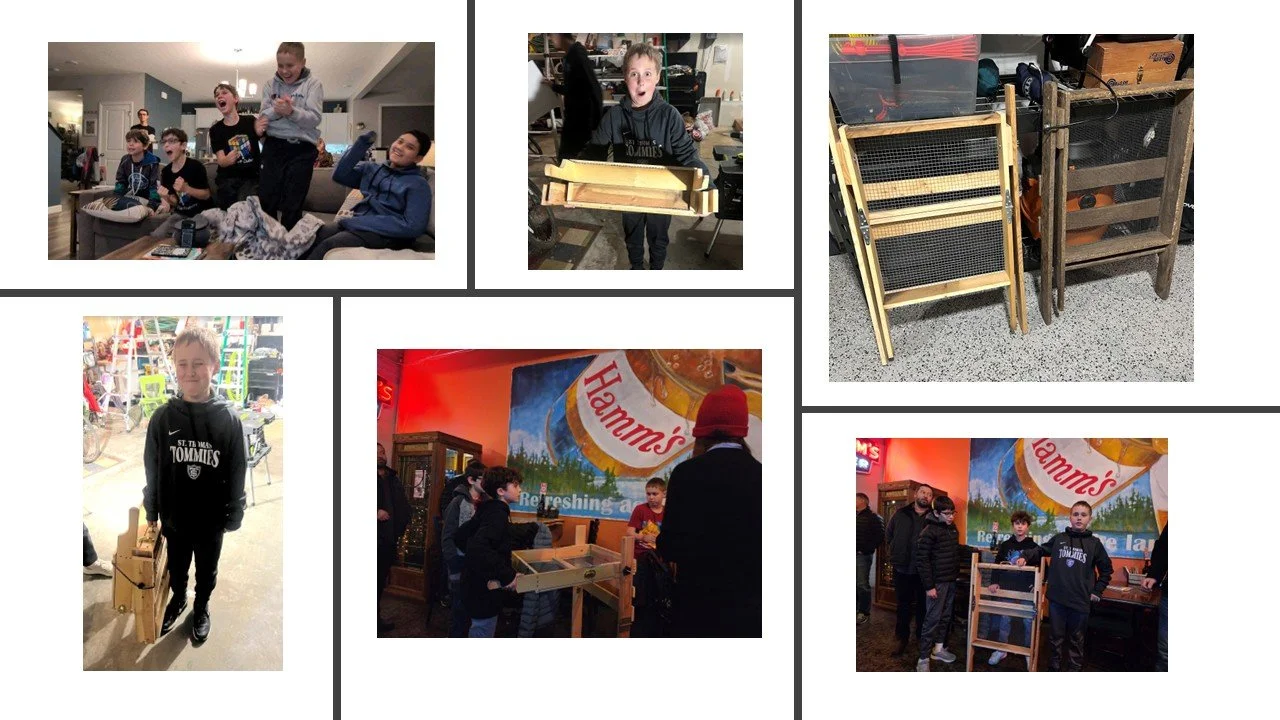
Young innovators from the FIRST® LEGO® League team, the MN Ice Cubers, share their portable, foldable sifter designed to make archaeological fieldwork more efficient, accessible, and easy to transport. (Photo credits: MN Ice Cubers and Ivy Faulkner)
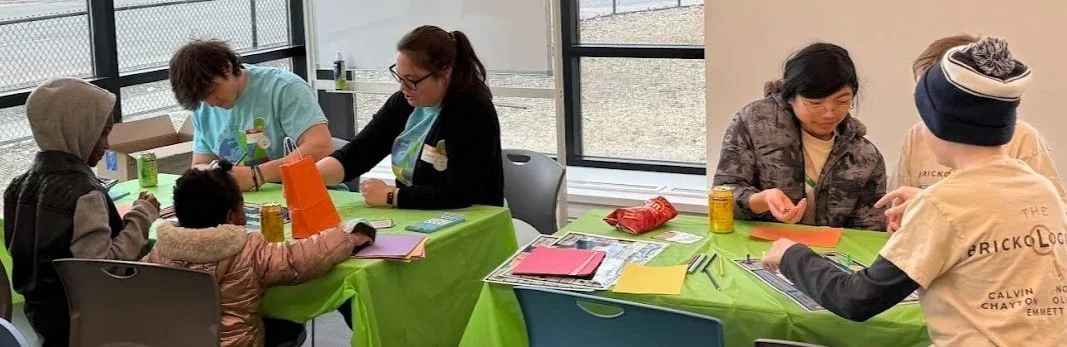
In two brief intermissions, volunteers and explorers learned about two groups of young innovators from the FIRST® LEGO® League. First, we got to learn about the innovation by the MN Ice Cubers, designed to help scientists who use sifters out in the field. This team created a portable and foldable sifter for easier and lighter transportation. Their sifter also included 3-D printed sharpie holder and trowel holder for scientists’ convenience. Most of the archaeologists in attendance were eager to give this new contraption a test out in the field!
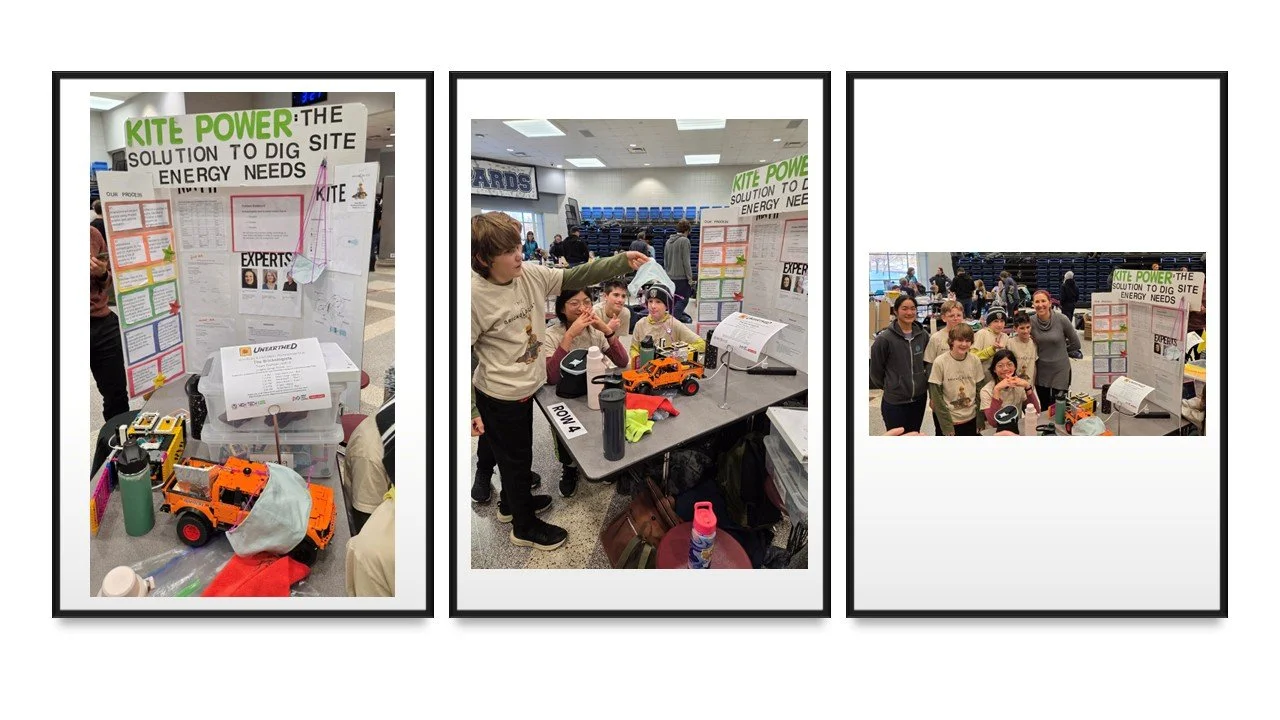
Another FIRST® LEGO® League team, the Brickologists, share their “Kite Power” innovation which uses wind and a kite system to generate sustainable energy for fieldwork with minimal environmental impact. (Photo credits: Brickologists an Ivy Faulkner)
Secondly, we learned how the Brickologists created a LEGO truck as a model for their energy-by-kite invention. While out in the field, some scientists struggle to find reliable and sustainable sources of energy to use for their work. The Brickologists demonstrated a way to create energy using wind and a kite attached to a vehicle can create a source that has a small footprint, reducing impact to wildlife without polluting habitats by making use of the easily accessible air.
Finally, explorers took home goody-bags of their drawings, worksheets, and prizes from their fruitful explorations in ecology, archaeology and paleontology.
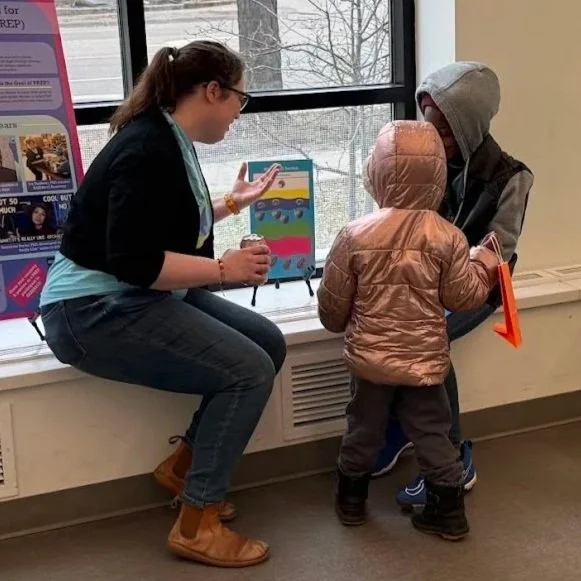
During a one-on-one moment of curiosity and connection explorers engage in conversation and discovery with Vice President, Carrie Miller. (Photo credit: Alexandra DeYoe)
Help SASSAk12 by supporting community events such as Discovery & Connection Day